INSIGHT BLOG
The Biggest Home Theater Seating Mistakes (and How to Avoid Them)
Seating plays a central role in home theater performance. This guide highlights the most common seating mistakes—and how a thoughtful design process keeps audio, sightlines, and comfort working together seamlessly.
Above: Row of premium leather Valentino theater recliners in a dedicated home cinema.
SECTIONS
Why Seating Design Matters More Than You Think
Above: A classic home theater mistake: without a platform riser, the viewers in the back row have their view obstructed by the seats in front of them.
A home theater works best when every part of the room supports the experience—and seating plays a major role. Chair height, row spacing, materials, and even small placement changes can significantly affect comfort, visibility, and sound.
A well‑planned seating layout strengthens three key pillars:
- Audio clarity — keeping speaker paths open.
- Visual precision — ensuring every seat has a clear, comfortable view.
- Ergonomic support — maintaining comfort during long films.
Great seating design isn’t just about looks or motorization. It’s about precise engineering that helps the entire room work together seamlessly.
The Most Common Seating Mistakes in Home Theater Design
Sound loses clarity when seats block speakers or sit too close to the screen wall. When a seat back rises into the tweeter’s path or crowds the front stage, dialogue and effects lose detail and direction.
Key issues occur when:
- Seat backs intrude into the speaker’s direct path.
- Front‑row seats sit too close to in‑wall or behind‑screen speakers.
- Tall or oversized headrests disrupt horizontal or vertical dispersion.
Even high‑end speakers underperform when seating interferes with their firing angles. Proper layouts keep speaker paths fully open so sound reaches every listener cleanly.
Sightlines shape how comfortably each viewer experiences the screen. Even small misalignments can cause someone’s view to be blocked or make the screen feel awkward to watch.
Sightline issues often come from:
- Risers that aren’t tall enough, leaving back rows partially blocked.
- Seats placed too close to the screen, creating an uncomfortable field‑of‑view.
- Tall incliners that raise eye‑points higher than intended.
- Overfilled rows, pushing viewers outside ideal viewing angles.
A proper sightline study calculates the best vertical and horizontal viewing angles so every seat enjoys a clear, natural view without needing to lean or adjust.
Comfort is essential in a home theater, and spacing plays a major role in how easy the room is to use. When rows are too close together, movement is restricted and recliners can bump into each other or into the walls.
Common issues include:
- Walkways narrower than 12 inches from the seat’s fully reclined position.
- Not enough space for recliners to fully extend.
- Crowded aisles that make the room feel tight and disrupt the flow.
Good spacing keeps the room comfortable, safe, and easy to move through—helping every viewer enjoy long movie nights without disruption.
Sound behaves differently depending on where listeners sit. When chairs are placed too close to untreated walls or areas with low‑frequency buildup, the audio can become boomy, uneven, or unbalanced.
Common issues include:
- Placing seats in areas where bass collects, which can make low frequencies sound muddy.
- Positioning rows too close to reflective surfaces, causing echoes or harshness.
- Using seat shapes or materials that overly absorb highs, dulling detail.
A well‑balanced theater considers how seating interacts with the room’s acoustics so every listener hears clean, natural sound.
Above: Visualizing a Critical Error: Placing theater seating flush against the walls often obstructs the side surround speakers. As seen in this cutaway view, the chair back blocks the driver, muffling the audio and destroying the immersive experience.
How a Proper Design Process Eliminates These Mistakes
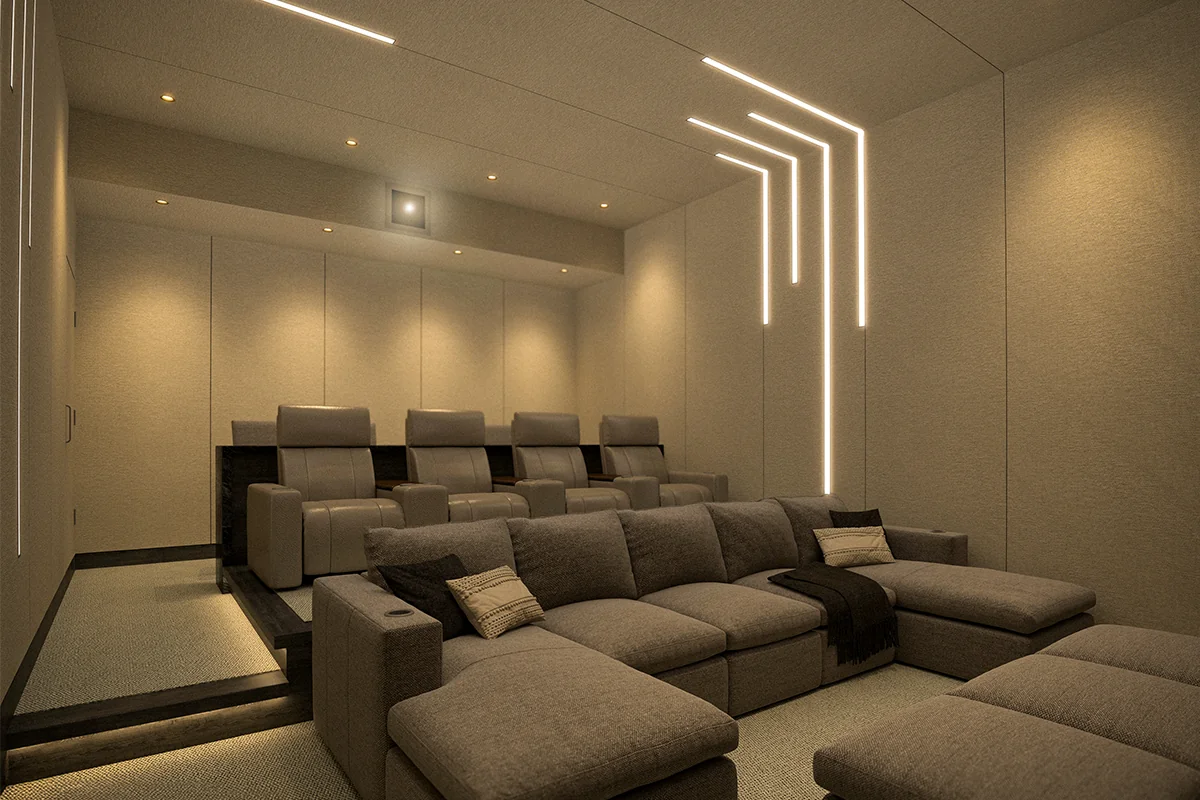
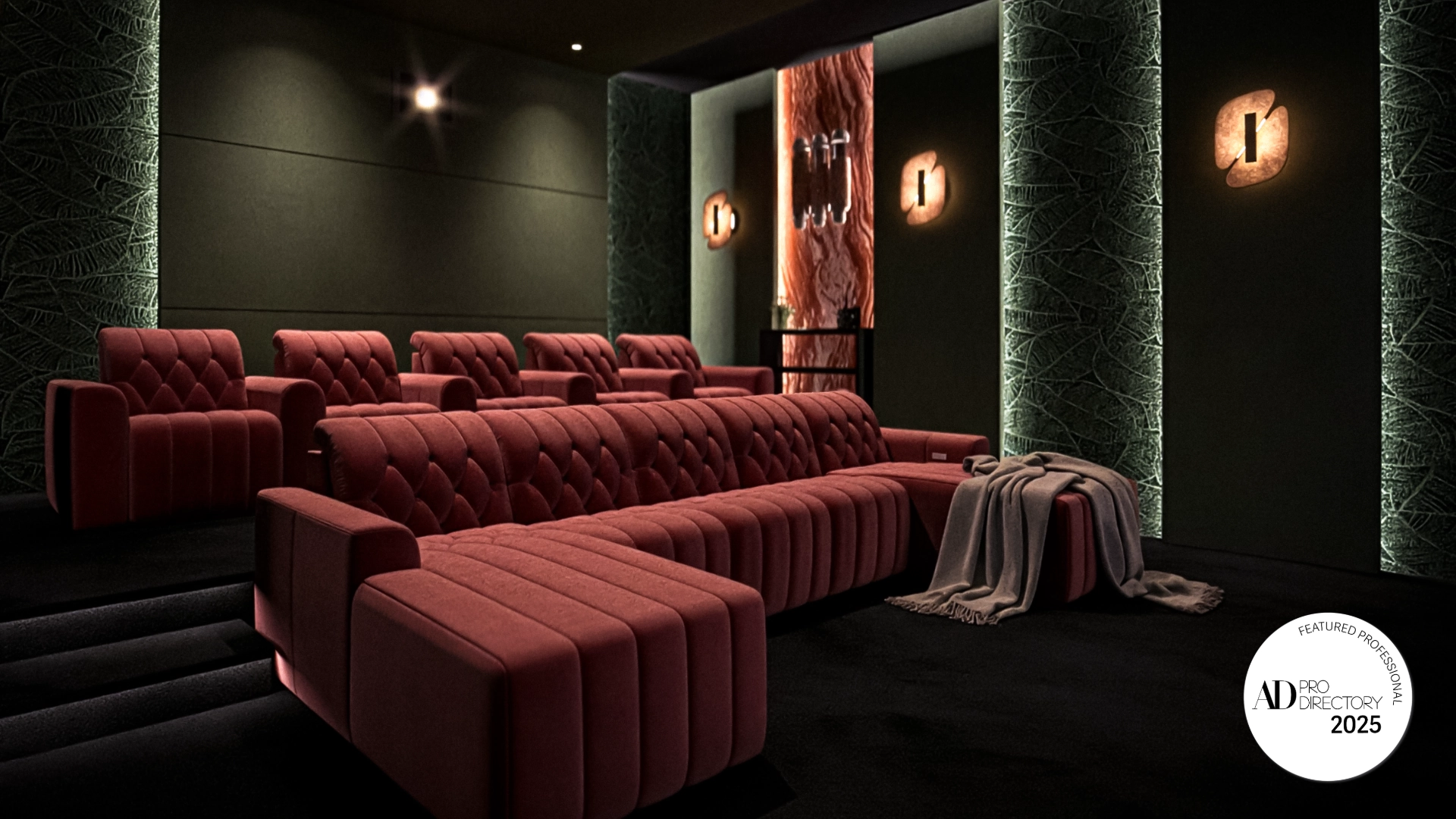
Above: You don’t have to stick to traditional rows. This theater (#7071) uses a comfy sectional in the front and theater recliners on the risers behind.
A strong design process helps prevent the most common issues before they reach the job site. Many performance problems begin early—often when room layout, speaker placement, or seating quantities are decided without a theater specialist involved.
Bringing a theater designer in early helps reduce revisions, control costs, and ensure that seating, sightlines, and acoustics all support the room’s long‑term performance. Clear coordination upfront leads to cleaner installations and a theater that works beautifully from the very first viewing.
Pre-Design Assessment
A pre-design assessment builds the foundation for all layout decisions. It clarifies the room’s proportions, system goals, and any physical limitations before seating is placed.
Key considerations include:
- Room dimensions that influence performance and layout.
- Speaker locations to keep seating aligned with clean dispersion paths.
- Screen size and placement to set proper sightlines and viewing distances.
- Architectural constraints that affect risers, walkways, or seat positions.
Seating Specification
With the room defined, seating is selected for comfort, balance, and long‑term performance. This step ensures each seat fits the space both ergonomically and visually.
Key considerations include:
- Seat models that support the room’s comfort and design goals.
- Widths and arm configurations that maintain proportion and spacing.
- Clearances for recline mechanisms to avoid collisions.
- Seat placement that preserves flow and aligns with audio paths.
Sightline & Layout Modeling
Sightline modeling ensures every viewer has a clear, natural view of the screen. This is where seating height, screen placement, and geometry align.
Key considerations include:
- Viewing angles that support comfortable, undistorted viewing.
- Ideal viewing distance based on screen size and resolution.
- Riser elevations for unobstructed visibility in back rows.
- Seat alignment to the screen’s focal axis for balanced viewing.
Finishes & Fabrics
While interior designers guide the overall palette, the theater designer reviews materials to ensure they support technical performance. This avoids glare, contrast issues, and conflicts with acoustic treatments.
Key considerations include:
- Reflectivity checks to prevent screen glare.
- Acoustic compatibility so fabrics don’t interfere with treatments.
- Finish alignment to ensure panels remain unobstructed.
This step keeps aesthetics and performance working together.
Final Verification
Final verification ensures everything functions exactly as intended before installation. This step confirms that the design translates properly into real‑world conditions.
Key considerations include:
- Recline and clearance paths that avoid collisions.
- Sightline accuracy using final elevations.
- Speaker and acoustic alignment to preserve performance.
- Riser and walkway dimensions for comfort, safety, and accessibility.
Seating Layout Best Practices Checklist
Above: Architectural CAD cross-section drawing showing construction details for home theater risers with integrated LED step lighting.
Before finalizing a theater layout, it helps to review the simple principles that consistently improve comfort, clarity, and overall performance. These best practices provide a clear, reliable checklist—helping you avoid common mistakes and create a seating layout that feels balanced, functional, and immersive.
Avoid blocking speaker paths.
Maintain clear dispersion lines for dialogue and effects.
Allow enough room between rows.
Maintain walkways of at least 12 inches from the seat’s fully reclined position.
Use correct riser heights.
Ensure each viewer has an unobstructed, natural sightline.
Confirm recliner clearance.
Measure both forward and backward extension.
Center seats to the screen axis.
Maintain a natural focal anchor for the room.
Consider acoustics.
Consider acoustic treatment around seating. Reduce echoes and optimize sound balance.
Home Cinema, Done Right
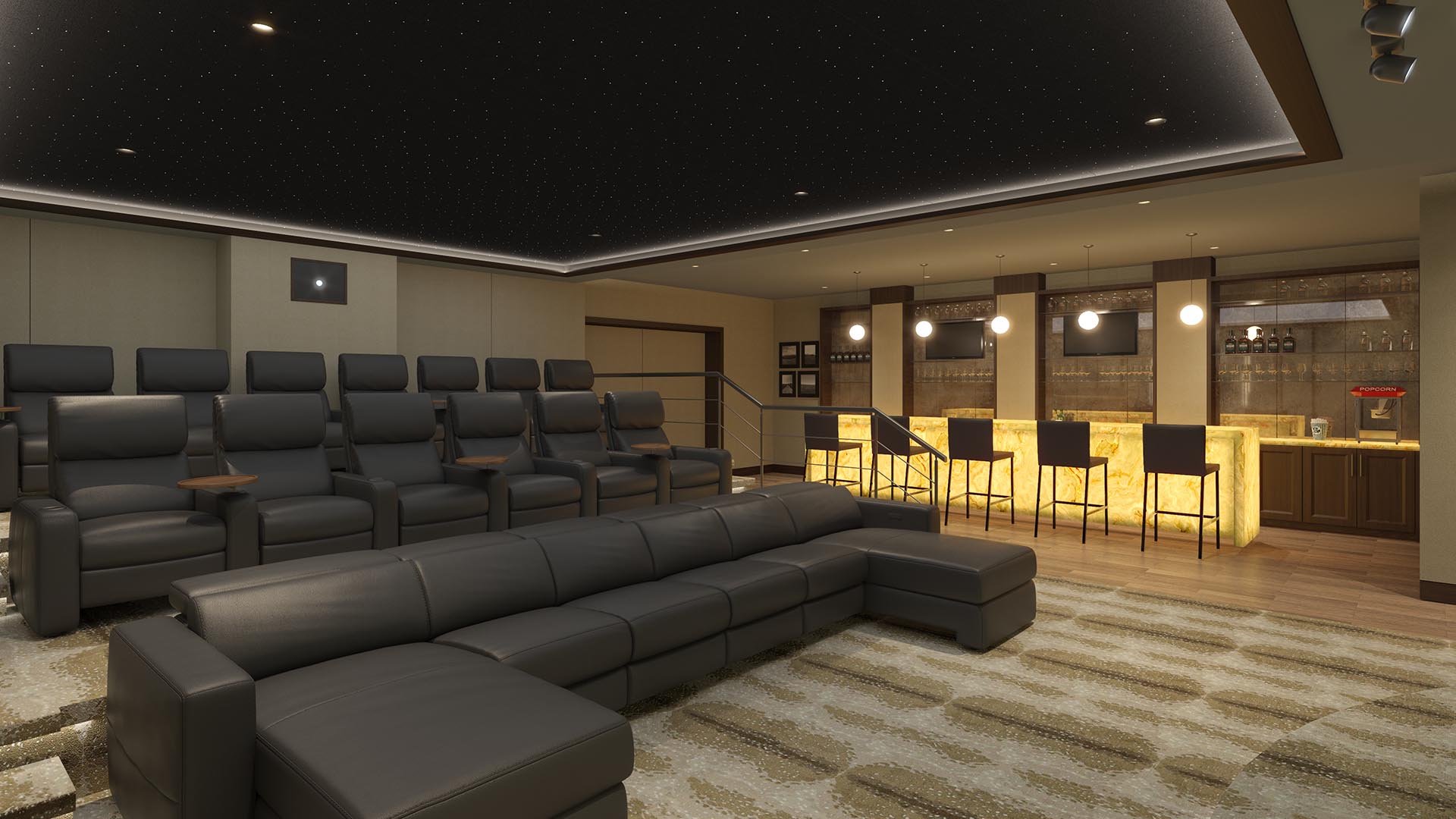
Above: Custom home theater #2014 featuring brown Sevilla leather recliners arranged in tiered stadium seating with a fiber optic star ceiling.