INSIGHT BLOG
Media Room vs. Dedicated Theater: How to Choose the Right Path
A media room and a dedicated theater can both be beautiful, high-performing spaces, but each supports a different kind of experience. This guide explores how lifestyle, seating, acoustics, and room design shape the right path.
Above: A comparison of a media room and a theater space.
SECTIONS
Every exceptional entertainment space begins with the same question: should the room feel integrated into daily life, or built entirely around the experience of watching and listening well?
For some homes, the answer is a media room. It is flexible, welcoming, and connected to the way the household actually lives. For others, it is a dedicated theater. It is darker, quieter, and shaped around immersion. And for many luxury homes, the strongest answer is a thoughtful blend of both.
That early decision influences everything that follows: seating, acoustics, display strategy, lighting, sightlines, and the overall emotional tone of the room.
Which Room Fits Your Life Best?
Answer a few quick questions to see whether a Media Room, Dedicated Theater, or High-Performance Hybrid may be the right fit for your home.
The First Decision Isn’t Technical

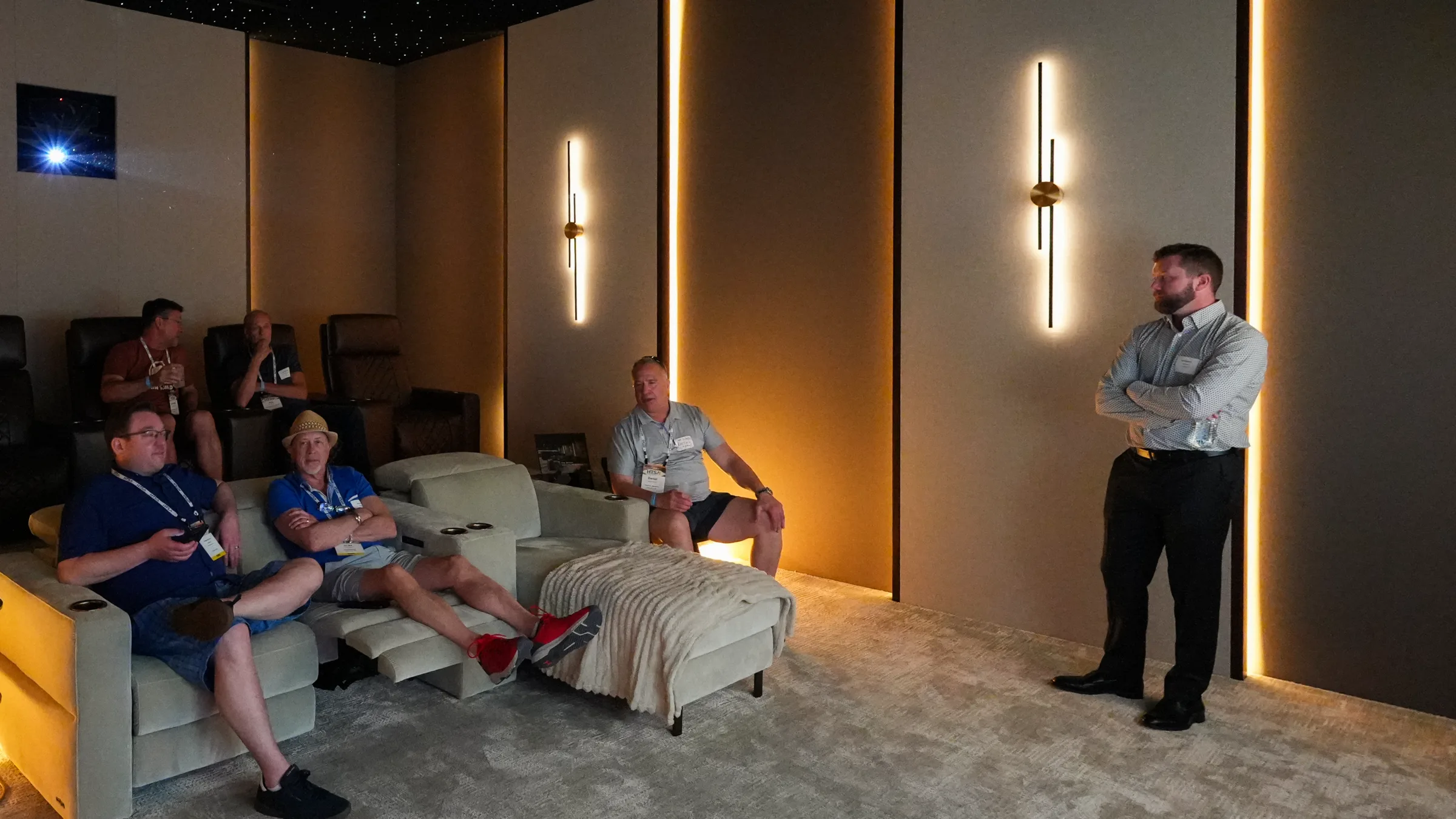
Above: A home theater planning session where layout, technology, and room performance are considered together from the start.
Most people assume this choice begins with equipment. In reality, it begins with lifestyle.
Will the room be used for movies only, or for sports, streaming, gaming, and everyday lounging too? Should it feel connected to the home, or intentionally set apart? Do you want a softer, more residential experience, or one built around control and focus?
That is why the decision is not about which room type is better. It is about which one fits the way you live.
What Is a Media Room?

Above: A luxury media room (#7012) designed for relaxed gathering, everyday comfort, and elevated viewing.
A media room is an entertainment space designed for more than one kind of use. It may host movie nights, sports, streaming, gaming, and casual entertaining in the same week. In many homes, it sits closer to everyday life than a formal theater ever could.
Unlike a fully enclosed theater, a media room often needs to feel resolved in daylight, comfortable for conversation, and visually connected to the rest of the home. The best media room design balances comfort, elegance, and performance without making the room feel overly technical.
When a Media Room Is a Better Choice
A media room is often the better choice when the space needs to do more than one thing well. It makes sense when the room is part of daily life, when flexibility matters, and when the design should feel integrated rather than isolated.
This path is especially strong for homeowners who want media room seating that feels lounge-like, inviting, and tailored to a more residential setting.

Above: A bright media room (#7080) designed for everyday living, generous seating, and a relaxed residential feel.

Above: A visual breakdown of CinemaTech’s acoustic wall system, showing layered construction, fabric retainer integration, and display wall design.
Acoustics in a Media Room
One of the biggest shifts in luxury media room design is the growing desire for real acoustic treatment. These spaces are no longer treated as casual compromises. Homeowners increasingly want them to sound controlled, clear, and immersive, even when the room remains open and highly livable.
That has made invisible integration more important than ever. Acoustical treatments need to support speech clarity, balance, and comfort without overwhelming the architecture.
CinemaTech’s ARS combines absorption, reflection, and diffusion in a fabric retainer-based system with a low 1 1/4-inch profile and performance down to 100 Hz, while remaining visually hidden behind acoustically transparent fabric.

Above: A luxury media room (#7063) showcasing display options, a fiber optic star ceiling, and refined modern seating.
Video Walls, OLEDs, and Bright-Room Display Strategy
Because media rooms often include windows or ambient light, the display strategy usually changes with the room. Many homeowners lean toward large-format flat panels, OLED displays, or video wall solutions that perform beautifully outside of a fully darkened environment.
That also creates an opportunity: the wall surrounding the display can be acoustically treated in a way that improves performance without making the front wall feel bulky or heavy.

Above: Animated step-by-step view of CinemaTech’s ceiling Acoustic Room System installation process, fading through each stage of assembly.
Ceiling Treatments Are Becoming More Important
In many media rooms, the ceiling has become one of the most valuable surfaces in the space. Acoustic ceiling treatments are increasingly popular because they improve comfort and clarity without interrupting the room as heavily as side-wall treatments sometimes can.
CinemaTech’s fiber optic ceilings add another layer to that opportunity. Handcrafted to order and woven through acoustically tested fabric, they allow the ceiling to contribute atmosphere and performance without interfering with image quality.
What Is a Dedicated Theater?
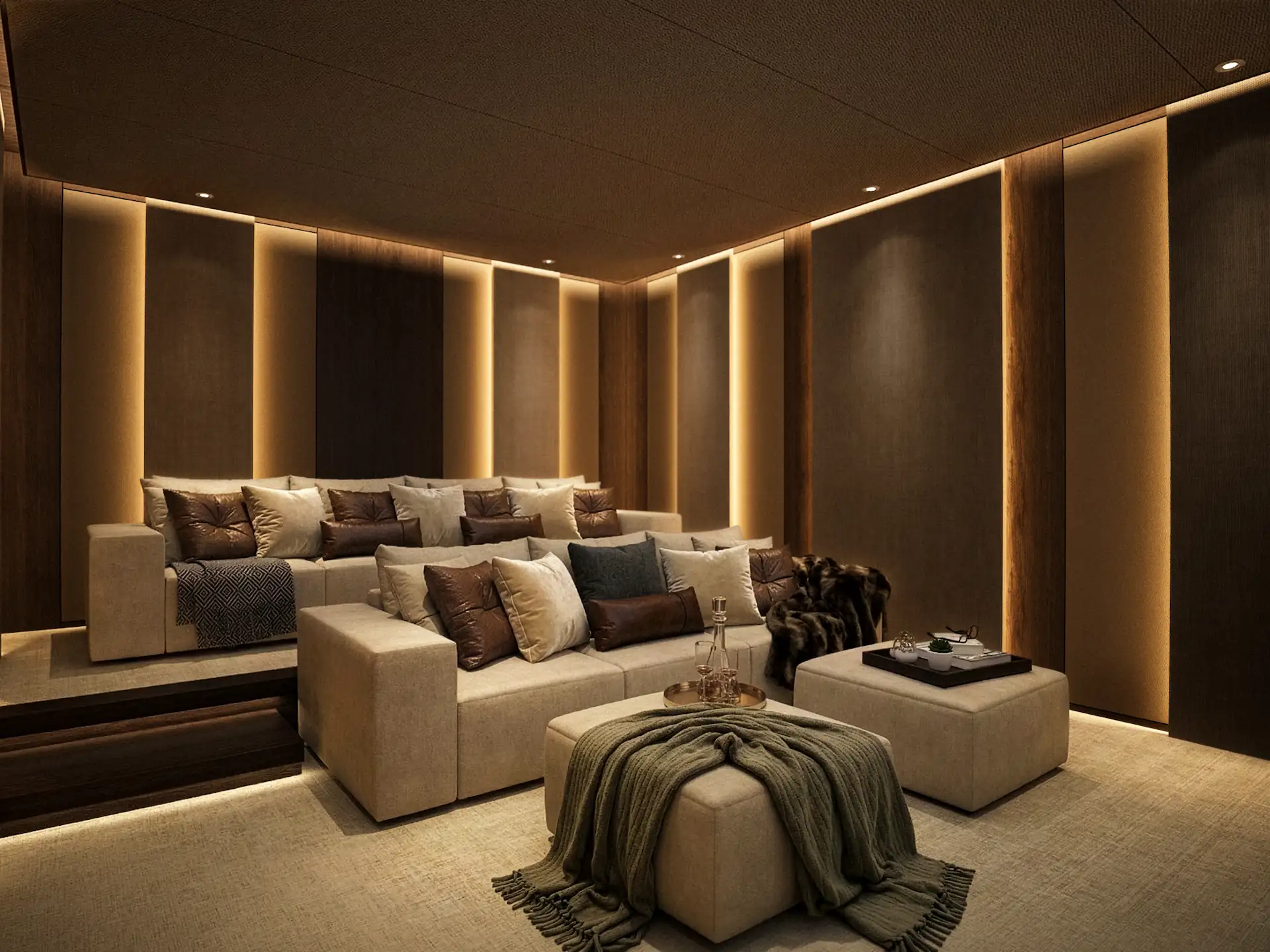
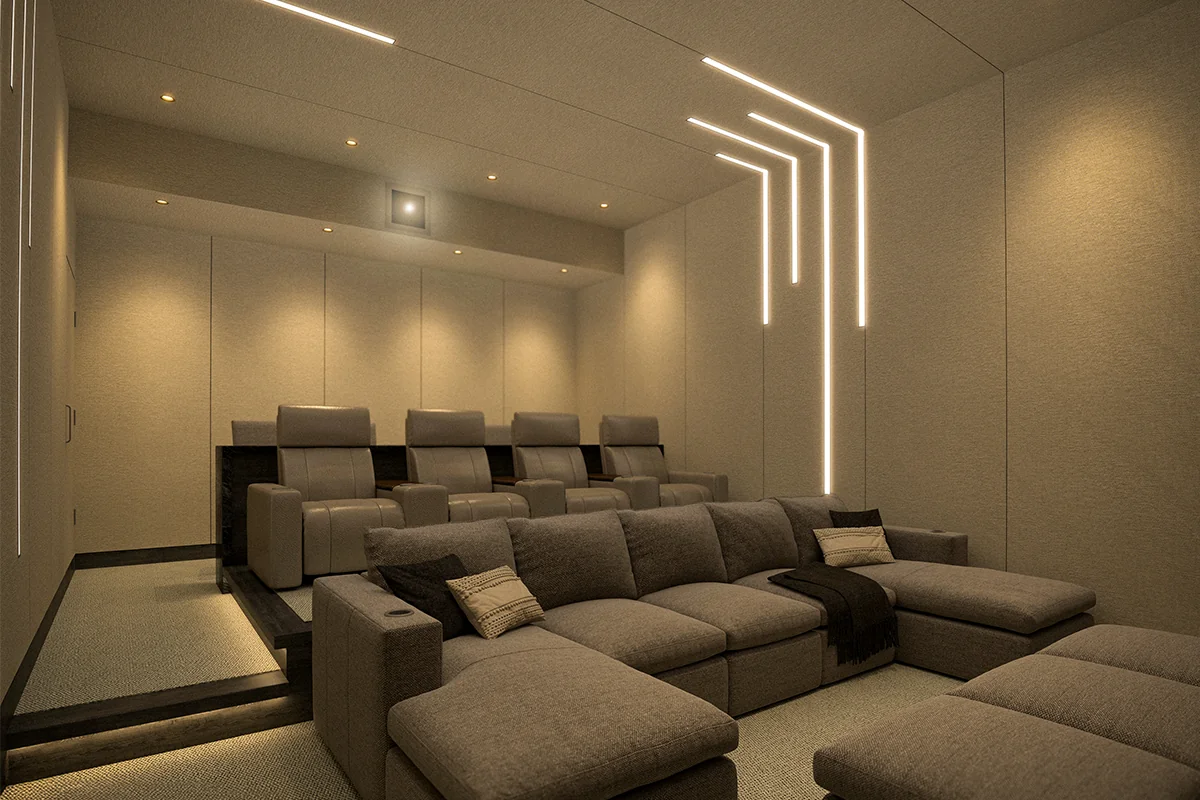
Above: A warm, contemporary luxury home theater (#9009) featuring tiered sectional seating, layered textures, and elegant integrated lighting.
A dedicated theater is defined by one idea: the room is designed around the experience itself.
It is typically enclosed, more controlled, and more intentional in every detail. Light is managed more carefully. Acoustics carry more weight. Seating layout becomes more precise. A dedicated theater feels less like an extension of everyday life and more like a destination within the home.
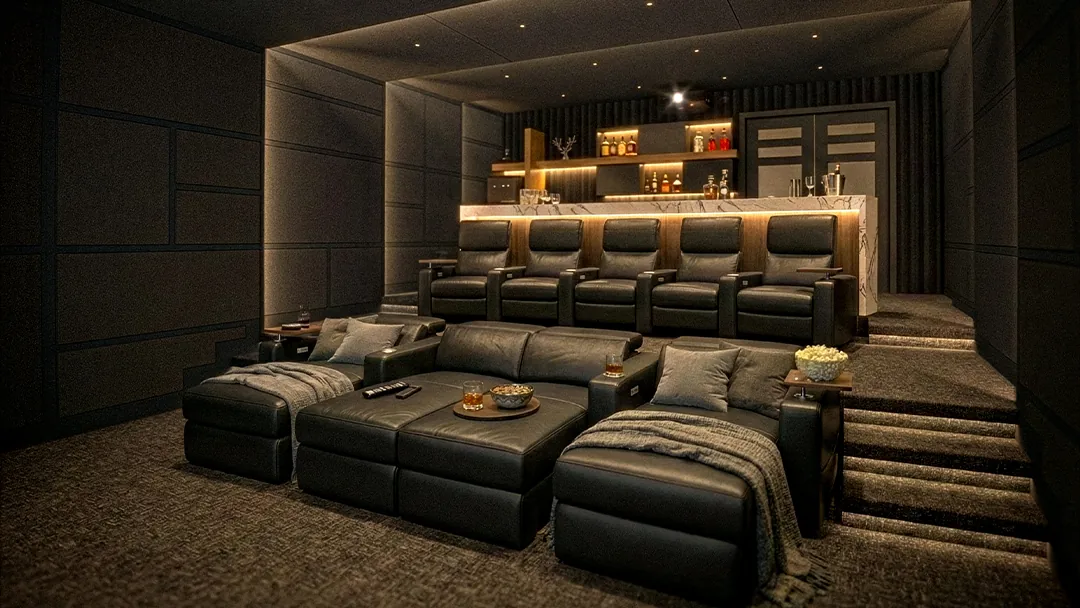
Above: A luxury home theater (#5022) that combines lounge seating, dedicated recliners, and a raised rear bar for a more social cinematic experience.
When a Dedicated Theater Is a Better Choice
A dedicated theater is often the better fit when movies and premium viewing are the central goal, when the room can be designed as a separate environment, and when immersion matters more than flexibility.
This path is especially compelling for homeowners pursuing custom home theater design in a new build or major renovation, where the room can be shaped around performance from the beginning.
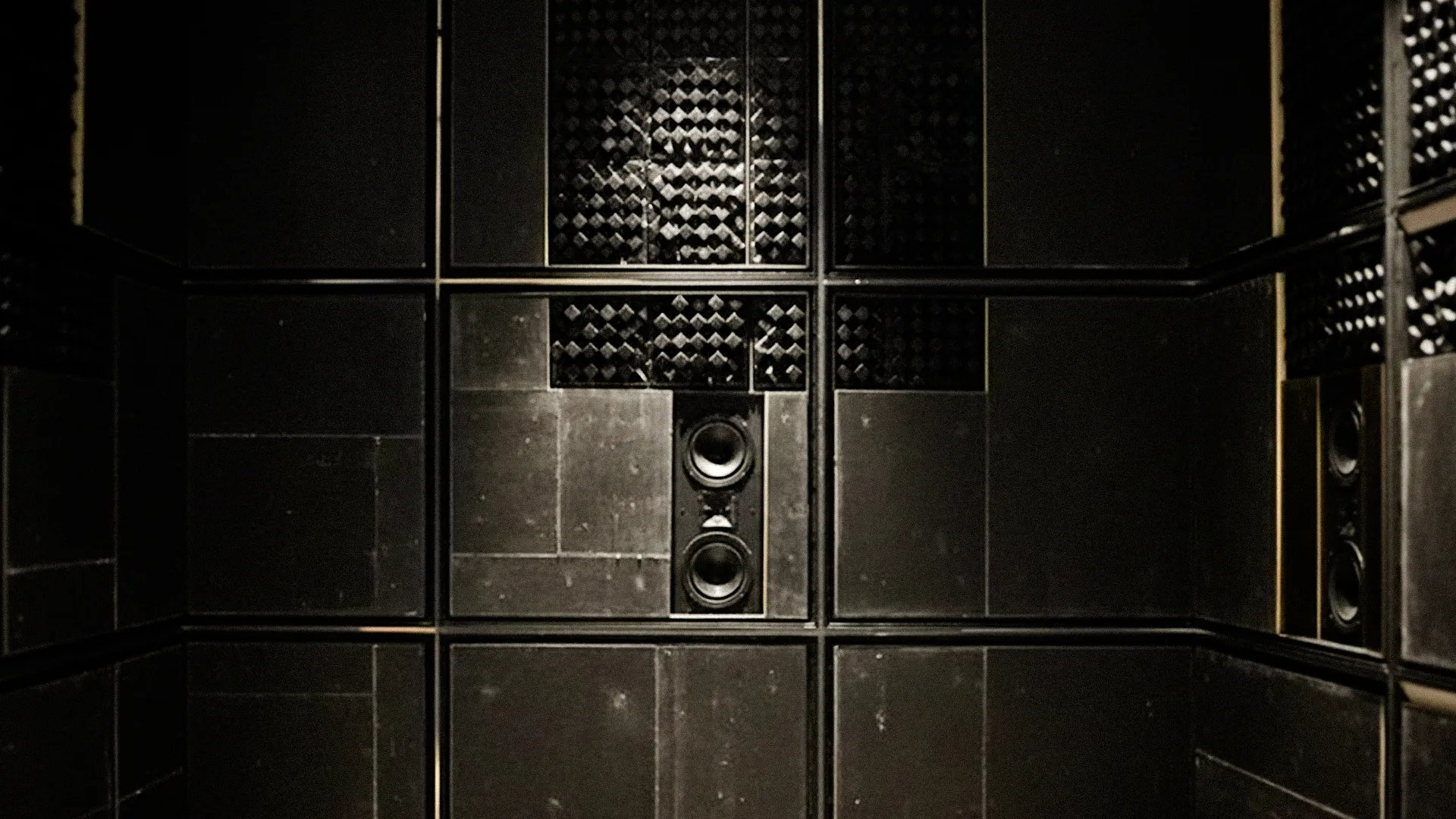
Above: CinemaTech’s Acoustic Room System Treatment, before the finishes are added.
Acoustic Control in a Dedicated Theater
A dedicated theater gives more room to lead. Because the environment is more controlled, the design can push further into room tuning, balance, isolation, and precision.
This is where early planning matters most. Poor sightlines, crowded seating, compromised aisle space, and weak acoustic coordination are much harder to solve once the room is already taking shape.
CinemaTech’s Design Service Program is built around these early decisions, with room analysis, sightline studies, AutoCAD drawings, and renderings that help define the room before key details are locked in.
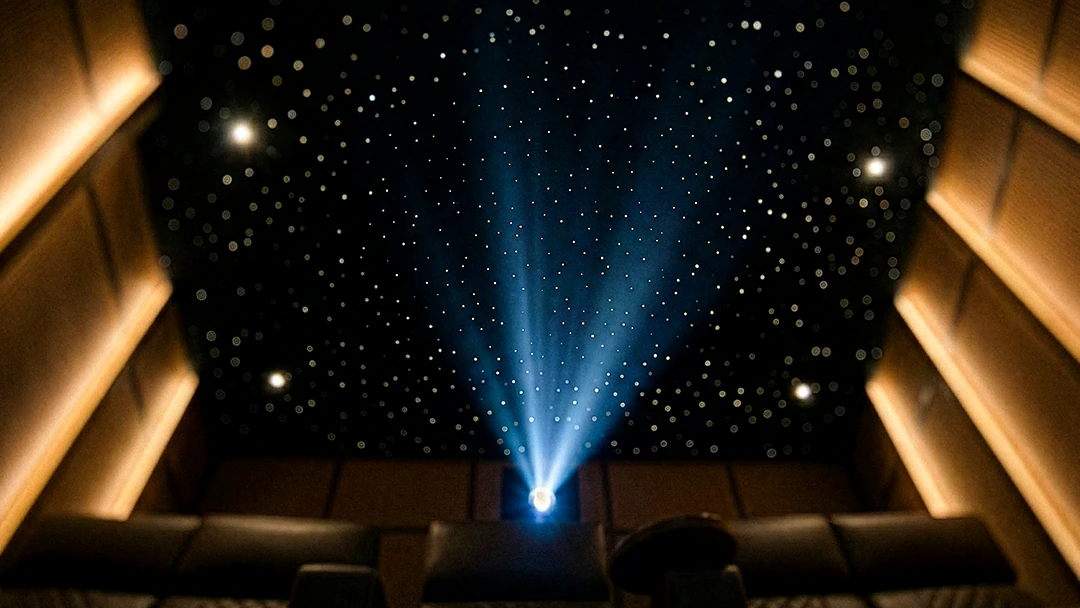
Above: A dramatic luxury home theater (#2014) view highlighting a CinemaTech fiber optic star ceiling, projector beam, and elegant integrated lighting.
Projection, Darkness, and the Cinematic Experience
When the room is built for darkness and focus, projection becomes a more natural fit. Dedicated theaters are often better suited to controlled lighting, projection-friendly layouts, and image strategies designed to disappear into the architecture when the film begins.
The result is not simply a larger image. It is a more immersive visual environment, shaped around concentration and calm.
Seating Layout Matters More Here
Seating matters in any room, but in a dedicated theater it becomes part of the room’s performance. Row spacing, riser height, viewing angles, recline clearances, and walkway widths all matter more when the room is built around focused viewing.
A theater can look impressive on paper and still feel wrong in use if those relationships are not resolved early.

Above: An overhead view of a luxury home theater (#7071) featuring sectional lounge seating, motorized recliners, tiered risers, and integrated acoustic wall design.
Media Room vs. Dedicated Theater: The Biggest Differences
There Is a Third Option: The High-Performance Hybrid

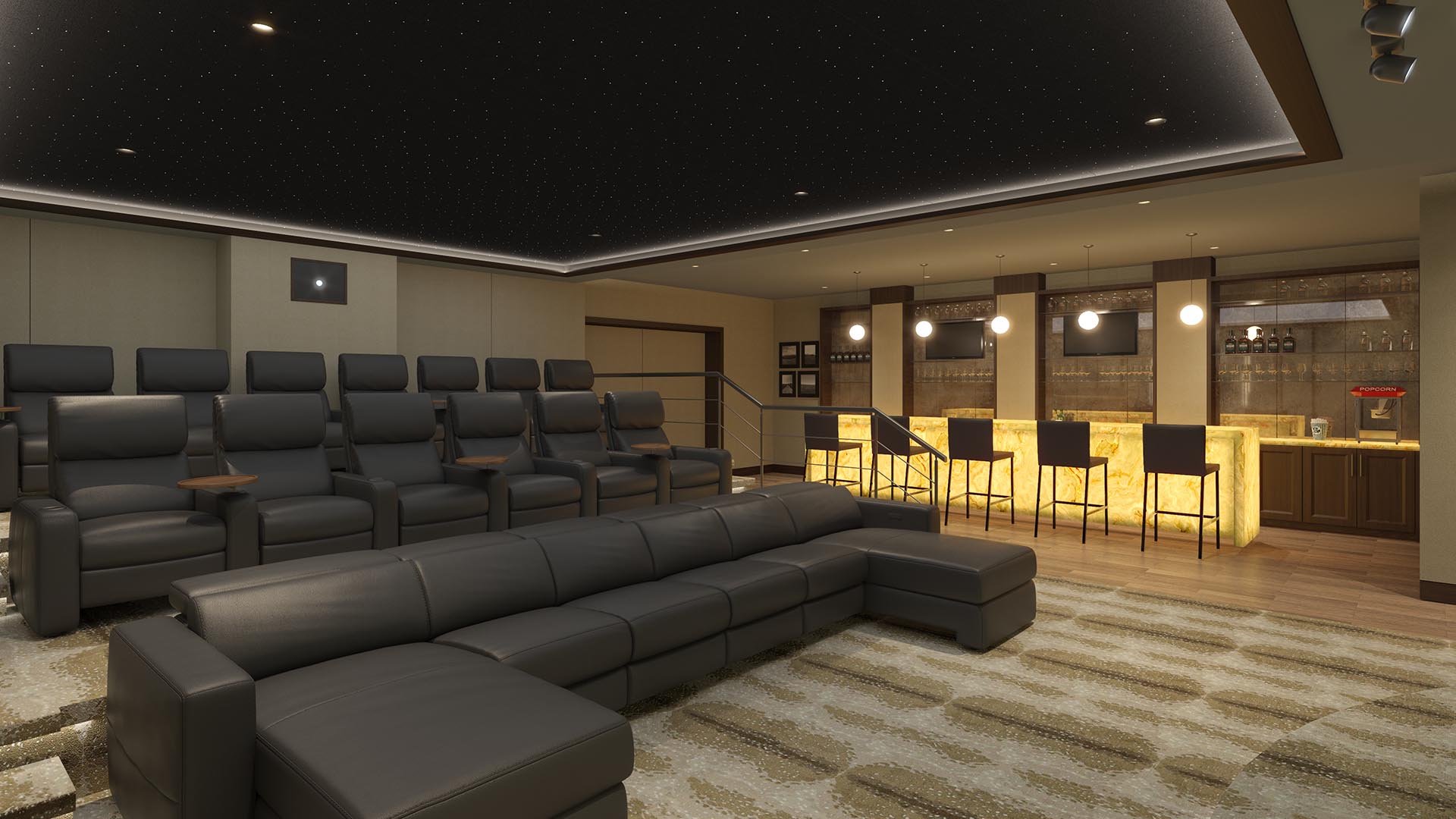
Above: Tiered seating, a fiber optic star ceiling, and a glowing rear bar give this theater-media space hybrid (#7045) cinematic presence and social energy.
For many luxury homes, the best answer is not a conventional media room or a formal theater in the strictest sense. It is a high-performance hybrid.
This path combines the ease of a media room with a much stronger level of acoustic planning, lighting control, seating precision, and visual discipline. The room still feels warm and connected to the home. Beneath that ease is far more intention.
For homeowners who want beauty and immersion without the formality of a traditional theater, this is often the most sophisticated answer of all.
The Design Decisions That Shape the Outcome
No matter which path you choose, the best results come from early coordination.
Seating layout affects comfort and circulation. Sightlines affect every viewing experience. Lighting shapes focus and atmosphere. Acoustics determine whether the room feels clear or fatiguing. Material coordination decides whether the room feels resolved or pieced together.
The rooms that feel effortless are usually the ones that were resolved early.

Above: Material selections play a major role in shaping the comfort, finish, and visual identity of a luxury entertainment room.
How CinemaTech Helps You Choose the Right Path

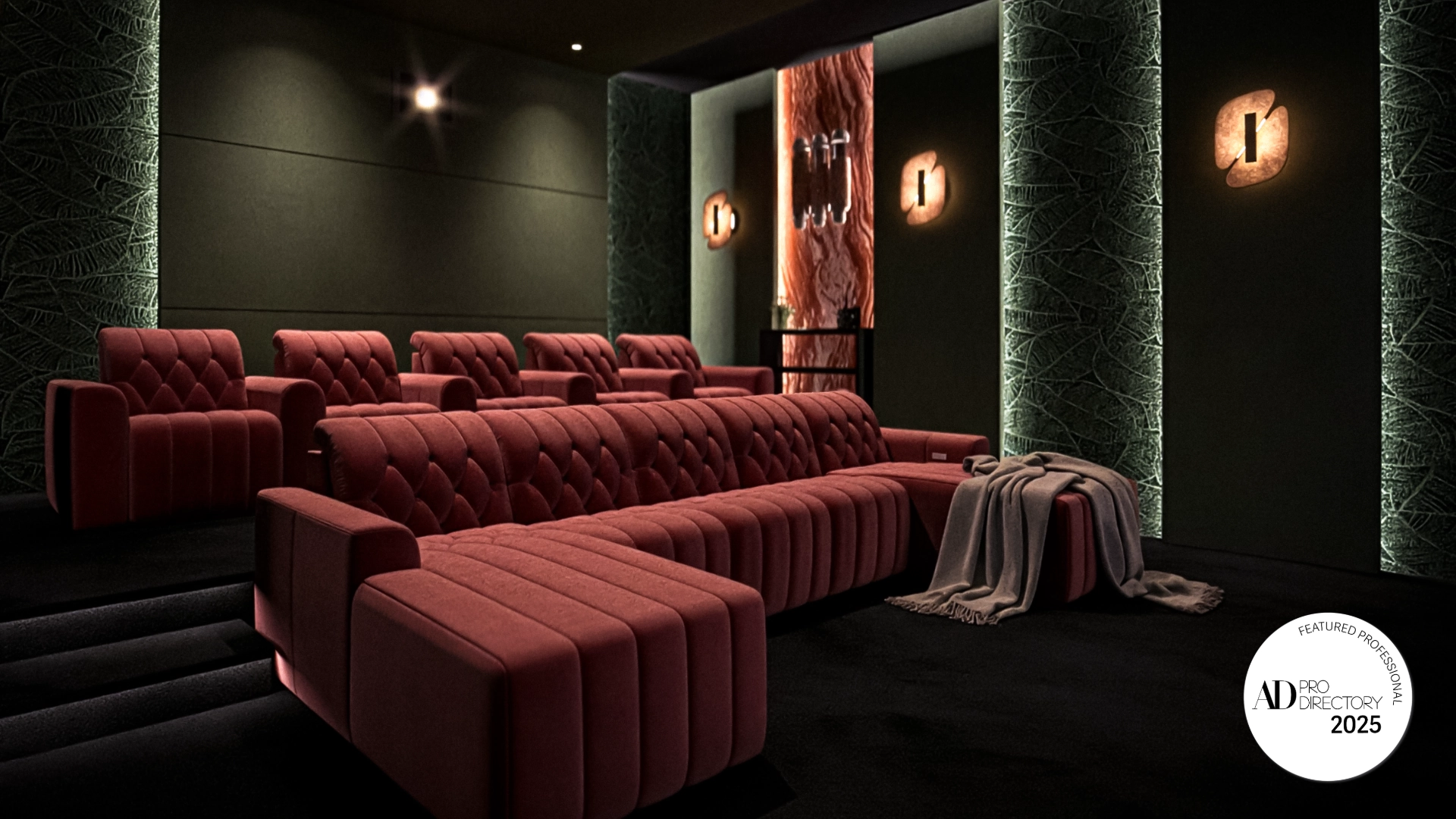
Above: A luxury theater room (#1124) that pairs tiered lounge seating with rich color, soft texture, and a more social, design-forward take on cinematic comfort.
CinemaTech’s design work begins before the room is overcommitted to the wrong assumptions. The process can include consultation, room analysis, AutoCAD drawings, sightline studies, renderings, acoustical planning, and tailored recommendations for seating, ARS, and ceiling features.
For homeowners comparing media room design vs. home theater design, the value is clarity. A media room and a dedicated theater can both be exceptional, but they succeed for different reasons. The strongest rooms begin when those priorities are understood early.
Frequently Asked Questions
Start Planning Your Space

Above: A visual overlay showing how technical planning and finished design come together in a well-resolved home theater.
The best room is the one that fits the way you live, the way you gather, and the way you want the experience to feel.
For some homes, that means a media room that is beautifully integrated into everyday life. For others, it means a dedicated theater built for full immersion. And for many, the most compelling answer is a high-performance hybrid that combines comfort and control with remarkable elegance.
The earlier that direction is defined, the stronger the room usually becomes.