Key Takeaways:
-
The home theater ideas that feel most luxurious are design decisions built into the room itself: layered seating, hidden light, a starlit ceiling, acoustic walls that look like fine upholstery, and a bar made for hosting.
-
Luxury shows up in what you don’t notice, with fixtures, speakers, and acoustic engineering kept out of sight so the room sets the mood on its own.
-
CinemaTech brings these ideas to private theaters and media rooms nationwide, with flagship locations in Los Angeles, Dallas, Fort Lauderdale, and New York.
The best private theaters set the mood long before the screen comes to life: the door seals with a silent hush, soft light radiates from recessed coves, and every seat turns out to be the best one in the house. As you settle in, the rest of the world falls away, leaving an unhurried, indulgent stillness that hums with anticipation for the film ahead. CinemaTech began in 1998 with a single handcrafted seat; today, its design team sketches ceilings full of stars, acoustics you feel but never see, and seating made for lingering into every plan before a single wall goes up. These 7 home theater ideas, drawn from CinemaTech’s design portfolio, show how each of those moments takes shape, and how it could come together in your own home.
What Home Theater Seating Ideas Make a Room Worth Lingering In?
Before the lights ever dim, the seating decides how the evening will feel: where the eye settles, where the sound finds you, and whether the room invites a quiet screening or a full house. Luxury seating is arranged around the way your friends and family gather, so the room works as well for a crowded premiere as it does for two people and a late-night film.
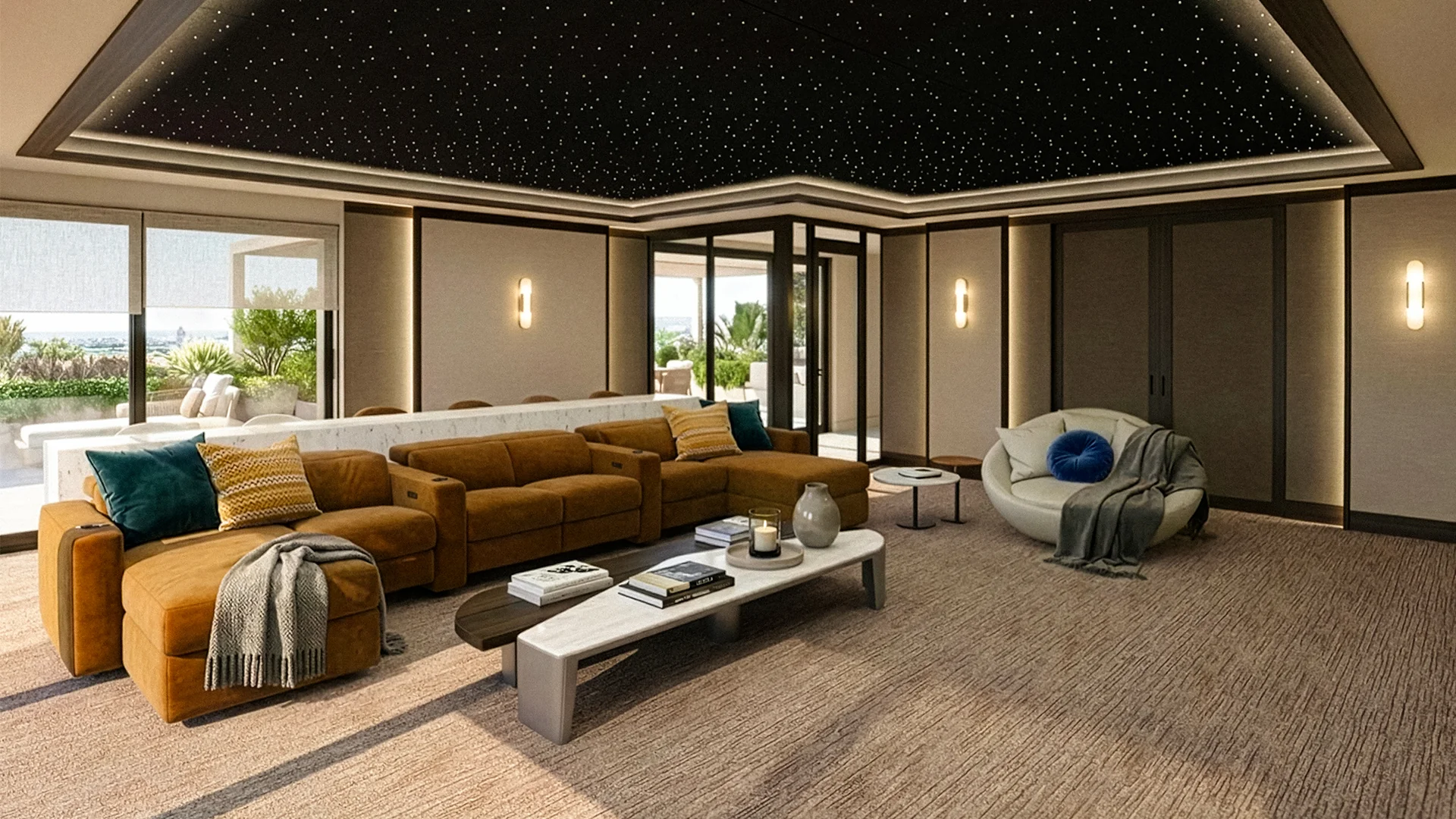
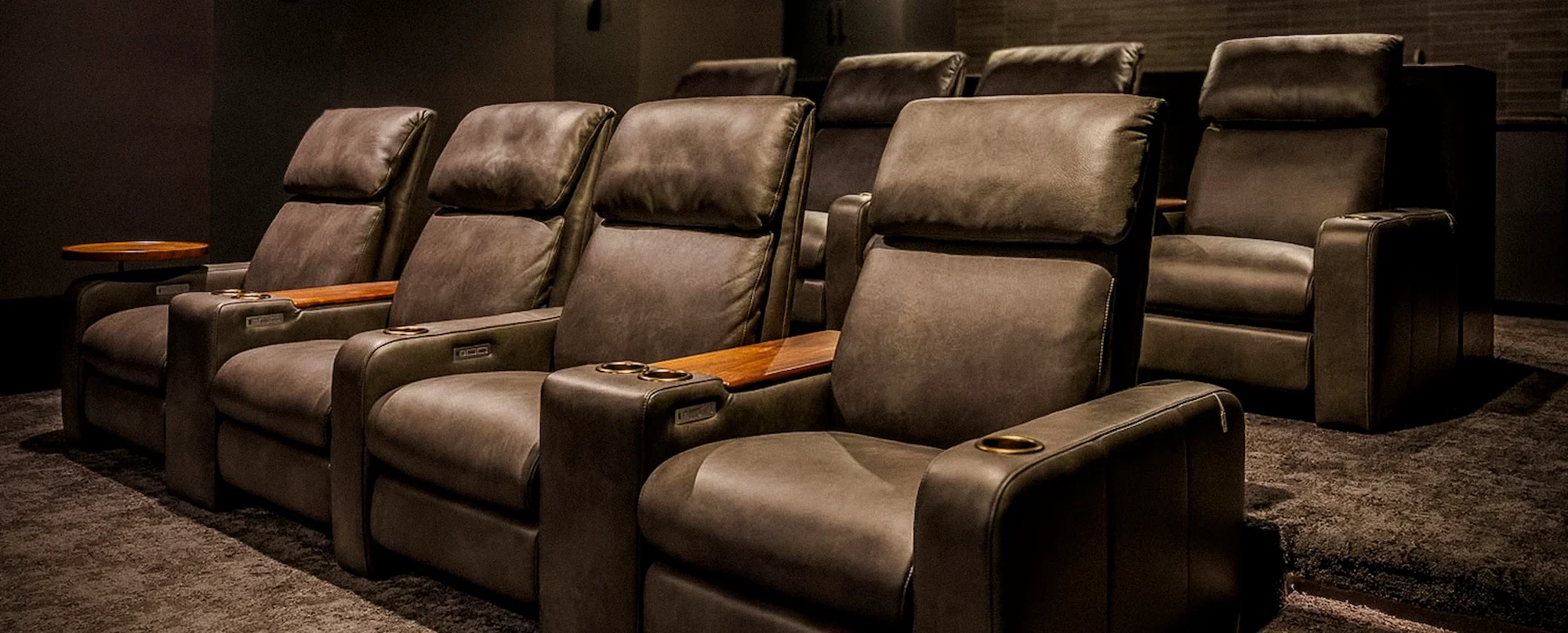
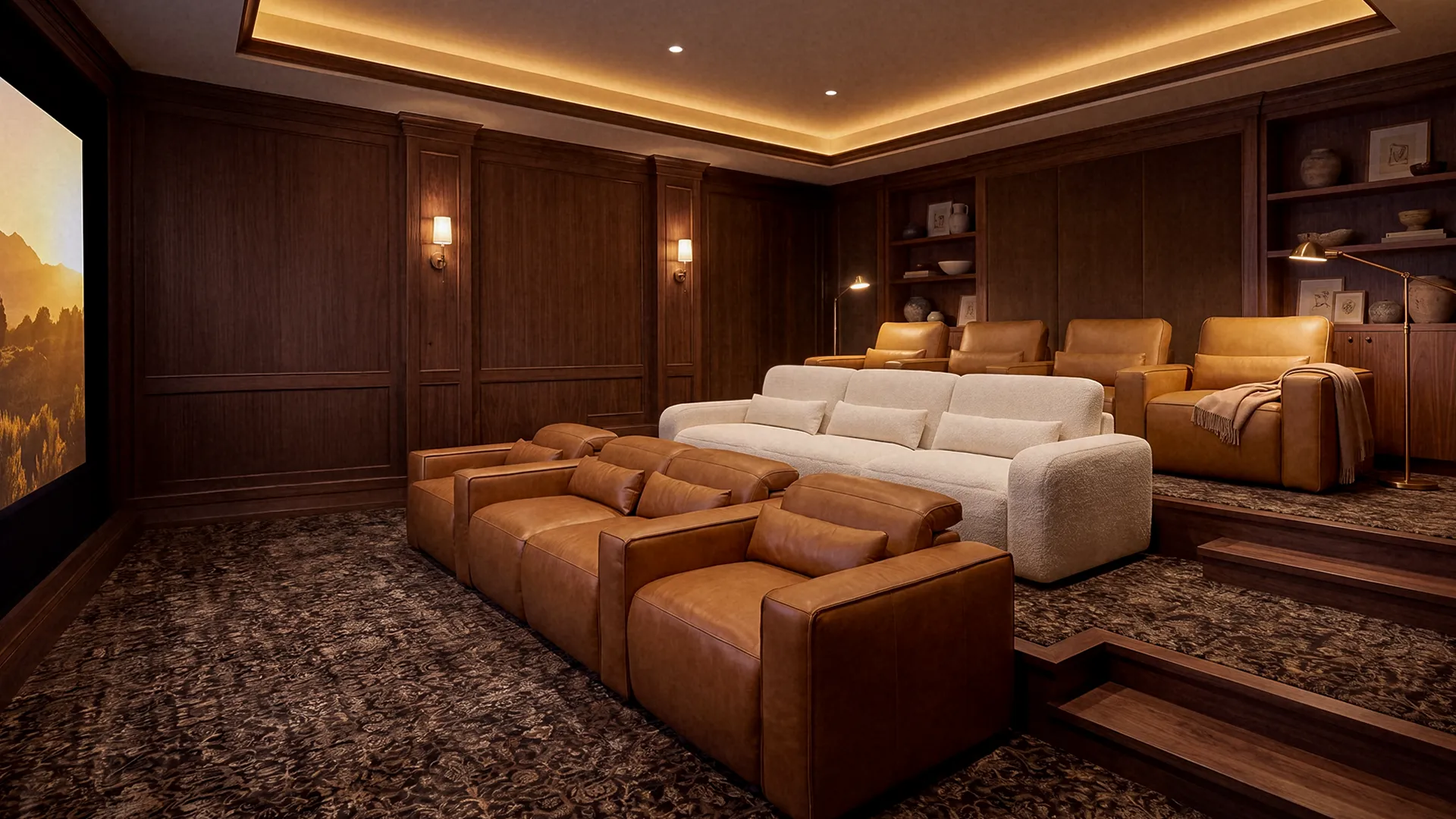
1. Combine Casual Loungers and Elevated Viewing. Split the room into two ways of watching: a deep, modular sofa on the main floor for the family who wants to stretch out, and a raised tier of motorized seating behind it for guests who want a clean, elevated view of the screen. The Greenwich suits that front row with its low, architectural proportions and broad wraparound forms, while the Stellina brings motorized, zero-gravity incline to the tier behind it in a soft, sofa-like form. Together, the two tiers let one room host a lazy Sunday matinee and a premiere night without sacrificing a single sightline.
2. Use 360° Swivel Seating for Moments When the Film Isn’t the Point. Place a pair of swivel chairs at the edges of the room, and it gains a second life beyond movie night, an approach you can see in Theater#9015. Models like the Noir and Seraphina offer full motorized incline for showtime, then turn on a smooth 360° base once the credits roll, so the same space shifts from private cinema to social lounge without anyone moving a thing.
Layout Tip: Give every seat room to breathe by leaving at least 12 inches of walkway clearance from each seat’s fully inclined position, and allow swivel chairs enough open floor to turn a full circle without meeting a neighbor. The result is a room guests can move through as easily as they settle into, and a layout ready for lighting to bring to life.
Which Home Theater Ideas Make the Room Glow Before the Film Begins?
When showtime nears, a well-designed theater doesn’t simply go dark: the walls soften, the ceiling seems to lift, and the screen quietly becomes the brightest thing in the room. The secret behind the most memorable home theater design ideas is light you feel rather than fixtures you see, built into the architecture so the glow belongs to the room itself.
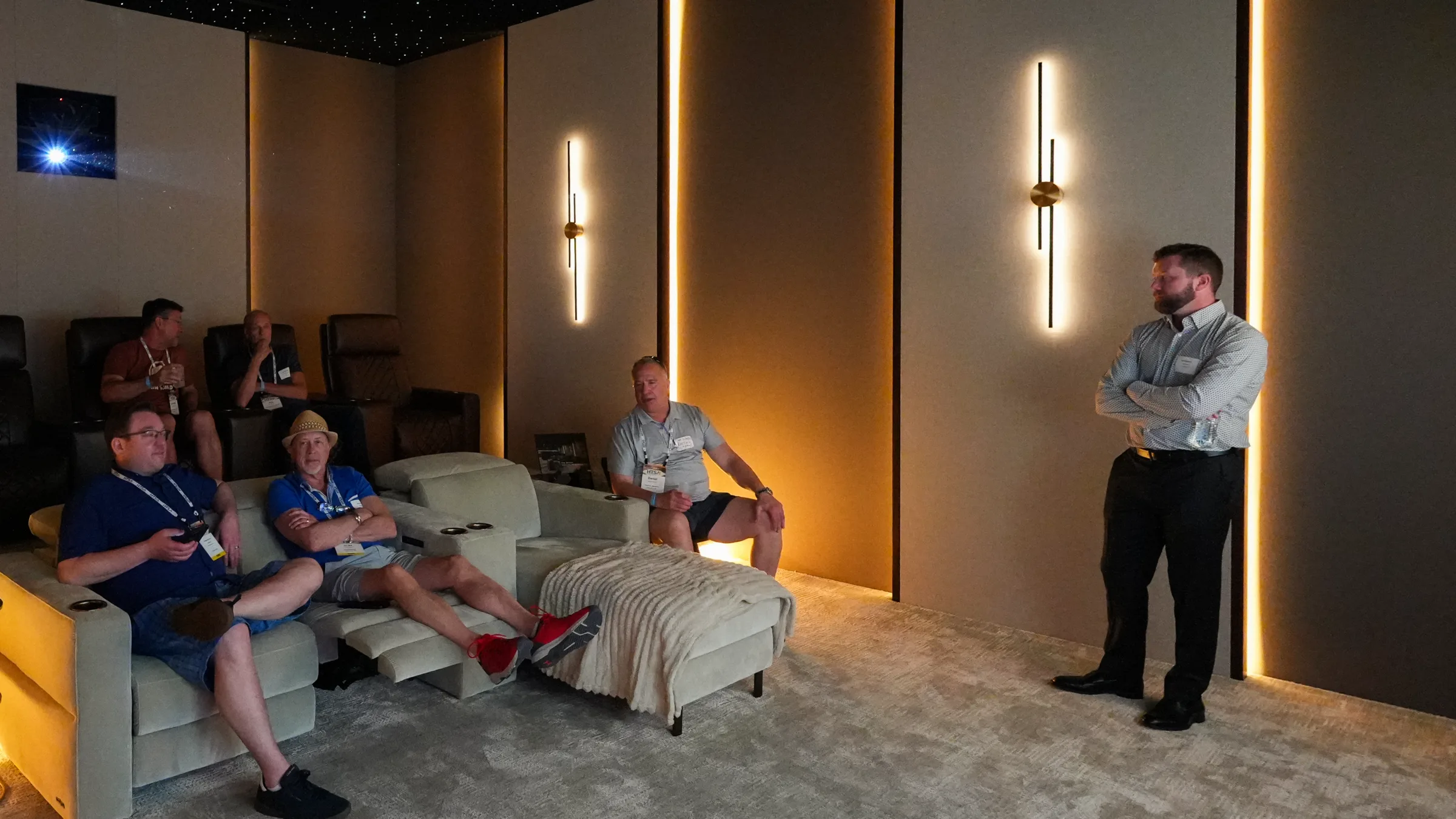
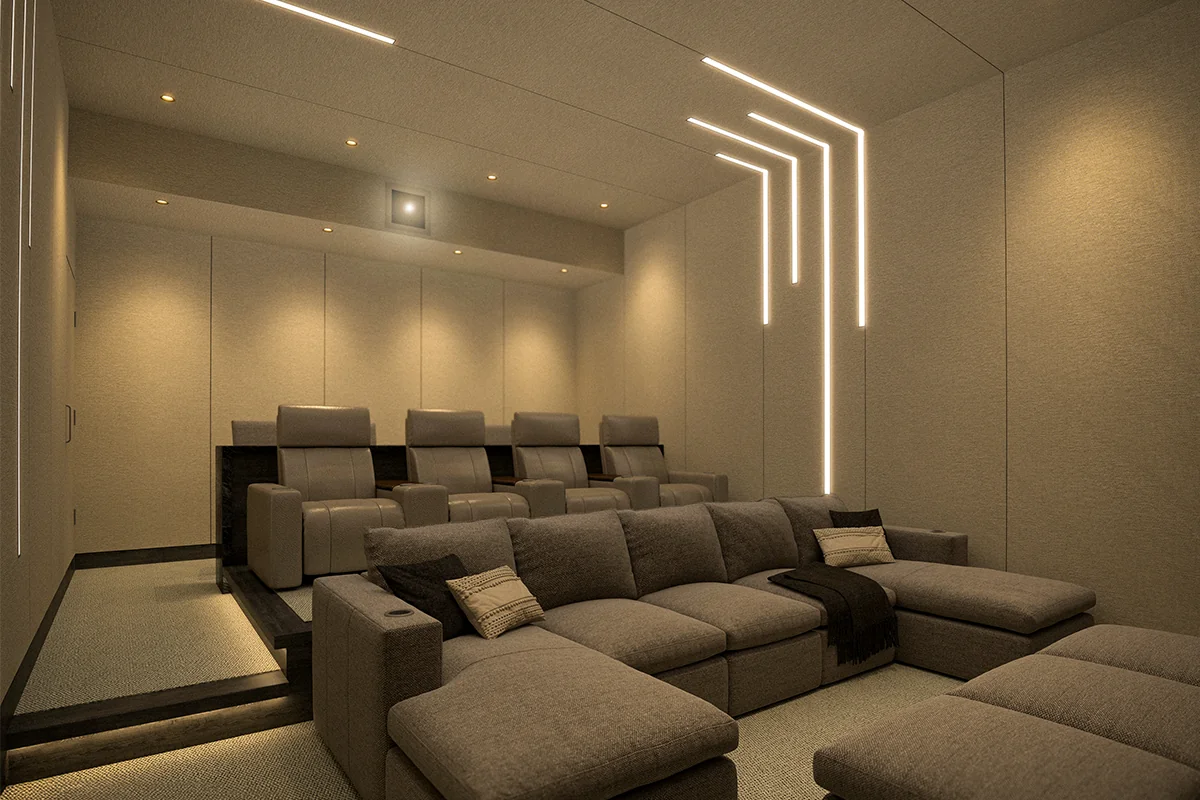
3. Wash the Walls and Ceiling in Light With No Visible Source. Tuck the light into the architecture itself, and the room glows without a single bulb for the eye to find. A cove channel recessed where the ceiling meets the wall throws a warm perimeter wash upward, so the ceiling looks lit from within, the way a stage does just before the curtain rises. Run linear LED channels vertically down fabric-wrapped walls, and a flat rectangular room gains height and rhythm, framing the screen the way columns frame a grand cinema. Theater#9027 pairs the two so they read as one piece of built architecture, though either alone turns a plain surface into something intentional.
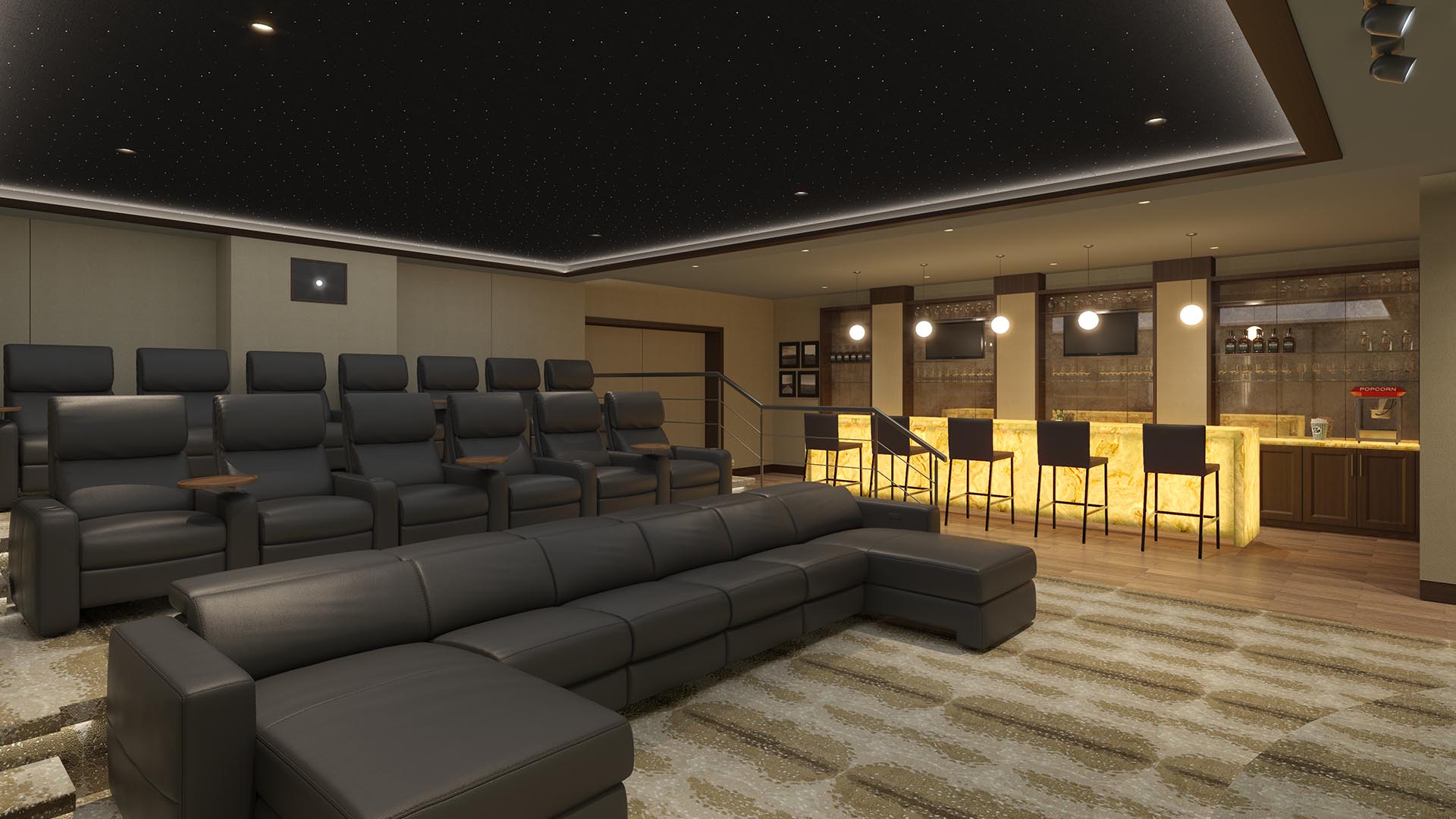
4. Turn the Ceiling Into a Private Night Sky.Few home theater ideas leave a bigger impression: the ceiling becomes the last thing guests notice before the film starts and the first thing they talk about after. CinemaTech’s fiber-optic star ceilings scatter hundreds of pinpoints of light overhead, each handcrafted to order and mapped to the room it lives in, so the field can trace a constellation that matters to the family or a slow drift of shooting stars. Woven through acoustically tested fabric, it adds wonder overhead without ever undercutting the sound, as in Theater#8036.
Designer’s Note: Let every light source frame the screen rather than wash across it, and plan the star field alongside the room’s exact dimensions from the start, since each ceiling is mapped and built to order. The result is a room that glows without competing with the picture, leaving the walls free to do what they do best: carry the sound.
How Can Home Theater Walls Sound Like a Studio & Look Like Fine Upholstery?
When you sit in a truly great private theater, dialogue lands crisp and close, the score swells cleanly with greatly reduced echo, the bass fills the room with depth and clarity, and you don’t see a single bit of the engineering behind it.
5. Hide the Acoustics Behind Fabric You’ll Love. Choose the color and texture you love from CinemaTech’s acoustically tested fabrics, and let the engineering vanish behind it. CinemaTech’s Acoustic Room System hides high- and low-frequency absorption and diffusion within a profile just 1.25 inches deep, performing down to 100 Hz. Because the Acoustic Wall Fabric Collection is designed to let sound pass to and from the treatment and speakers with minimal damping, you can choose anything from a moody charcoal that lets the screen melt into the wall to a warmer weave that softens the room between films, and CinemaTech can test a preferred fabric when needed. Align the horizontal seams with the top of the screen for the look of fine millwork, then carry the finish across treated and theatrical doors, as in Theaters#6000 and#9015, so even the entrance disappears.
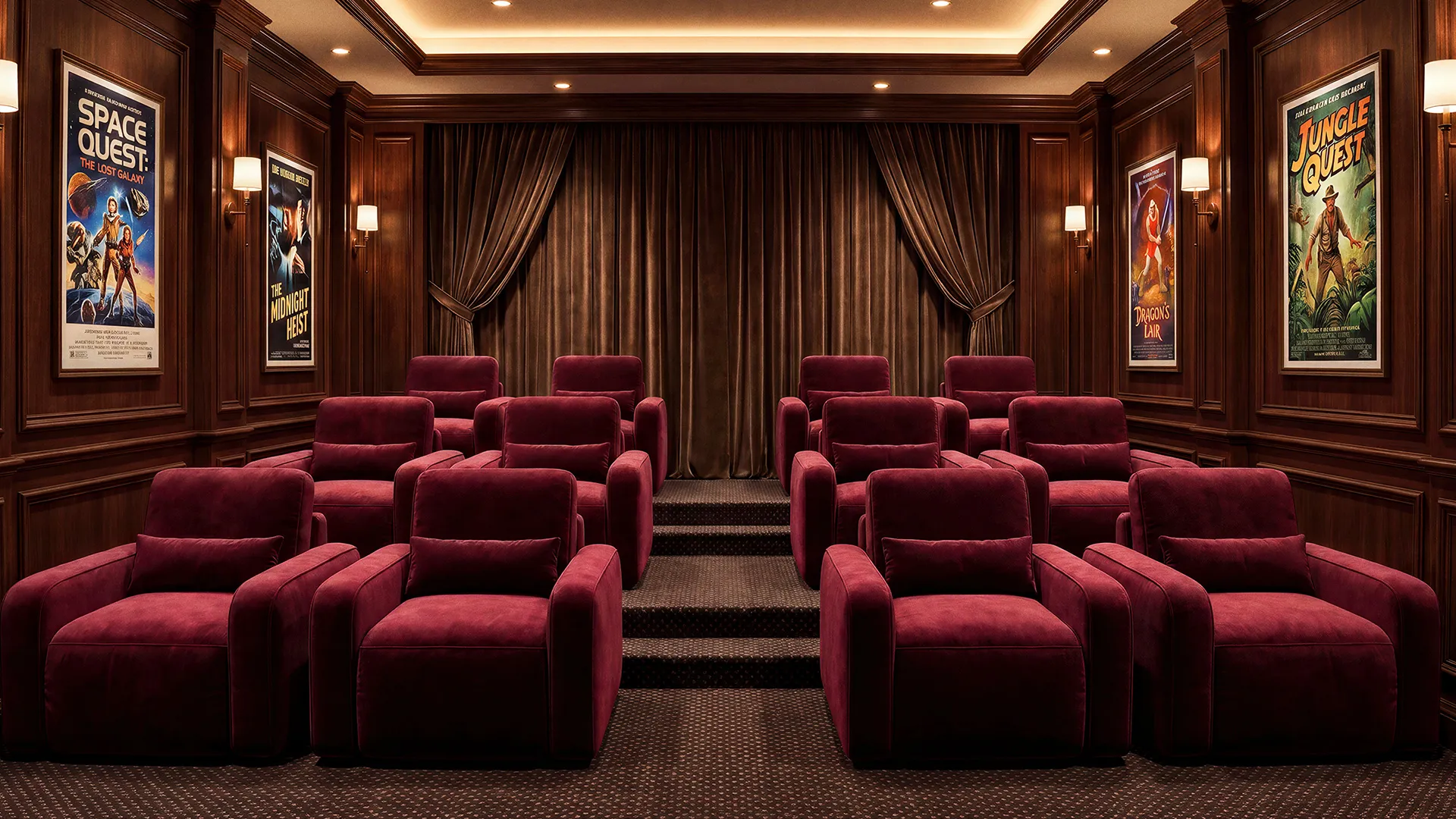
6. Frame the Screen Wall in Full-Height Drapery. It’s one of the simplest home theater ideas with the most theatrical payoff: hang heavy, textured curtains around the screen wall, and the room takes on the grandeur of the great 1920s picture palaces, where rich drapery framed the screen like a stage. The fabric softens a hard architectural boundary and conceals storage or equipment behind a single fluid line, as in Theater#9019-2.
Acoustic Insight: A room’s shape plays a big role in how it sounds. Square rooms tend to bounce sound between matching walls, leaving the bass heavy in one seat and hollow in the next, while longer rectangular rooms often provide a better acoustic starting point. Because risers, soffits, and the room’s exact dimensions still shape the result, CinemaTech’s designers and acoustical engineers study each room’s layout before planning the acoustics behind the fabric. That way, the finish you fall in love with never has to compete with the space it lives in.
What Home Theater Design Ideas Make the Room Ready for Guests?
The best nights in a private theater begin well before the opening scene and linger long after the credits: a drink poured, a conversation picked back up, a friend waving someone over to the back row. The most welcoming home theater ideas make room for those moments from the very first drawing, so hosting feels as natural to the space as the film itself.
7. Build the Bar Into the Millwork and Raise a Second Tier Behind It. Give guests somewhere to gather before the lights go down with a dry bar set into custom cabinetry, finished with illuminated glass shelving and a stone or quartz counter drawn from the room’s own palette. Where the layout allows, running water turns it into a fully plumbed bar, and a row of high-top stools along the counter gives guests who’d rather watch with a drink in hand a relaxed second tier behind the main seating. Theater#2901 brings exactly that character to its back row.
Planning Ahead: The most natural spot for a bar is behind the main seating, where guests can slip away for a refill without ever crossing the screen. If you want running water, include the bar sink in the first drawings so its supply and drain lines can be routed while the walls and floor are still open.
What Do Homeowners Ask Before Choosing Their Home Theater Ideas?
A few questions tend to surface once these ideas start taking shape in your own home.
1. Will a Star Ceiling Feel Gimmicky in a Refined Room?Not when it’s designed with the room in mind. CinemaTech’s star ceilings range from a soft, subtle gradient to a full constellation, so the effect can feel elegant rather than showy.
2. Will a Dedicated Theater Feel Closed Off From the Rest of My Home?It doesn’t have to. Today’s luxury theaters favor warm browns, taupes, and textured neutrals over the cool grays of the past, so the room feels like a natural extension of your home rather than a dark box down the hall.
3. How Do I Choose Which Home Theater Design Ideas to Include if I Can’t Do Them All?Start with the ones you’ll notice every time you sit down: the seating and the sound. Lighting, ceiling, and hosting details can then build around them, and a design consultation can help you weigh each one against your room and budget.
4. Will These Home Theater Ideas Still Feel Current in Ten Years?They’re designed to. With the engineering hidden behind timeless finishes and seating made to order for years of use, the room ages gracefully even as the technology inside it changes. If your taste evolves, the walls can follow: CinemaTech’s Acoustic Room System holds its fabric in a retainer, so it can be replaced with a new look without rebuilding the acoustics behind it.
Ready to Bring These Home Theater Ideas Into Your Own Home?
Ask anyone with a great private theater what they love most, and the answer is always specific, whether it’s a front row built for stretching out, a sky scattered across the ceiling, or a bar that makes the back of the room the place to be. Every one of those favorites started as a decision on paper, tested and refined before anything was built. CinemaTech’s Design Service Program is where that happens, from the first AutoCAD drawings and sightline studies to photorealistic 3D renderings and final material selections. Schedule a consultation to start planning your own private theater, or visit one of our flagship locations in Los Angeles, Dallas, Fort Lauderdale, or New York to sit in the seating, hear the acoustics, and see these home theater ideas come to life.